
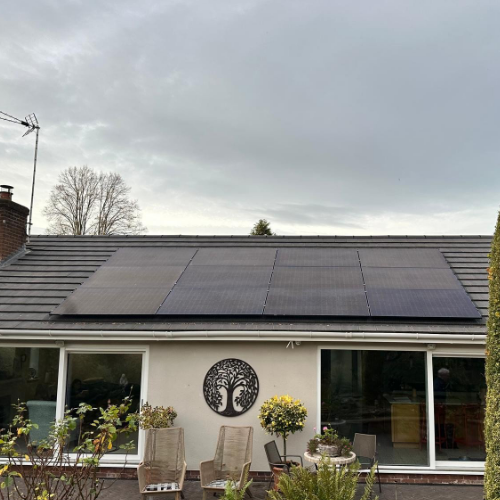
Many homeowners assume that if they have solar panels on their roof, their home will continue receiving electricity whenever the grid goes down.
However, this is not necessarily the case.
A typical solar PV system connected to the electricity grid is designed to work safely alongside the national electricity network. If there is a power cut, the solar system may automatically stop supplying electricity to the property.
This can seem surprising to homeowners who have invested in renewable energy.
The reason is related to how grid-connected solar systems, inverters and electrical safety systems operate.
Understanding what happens during a power cut can help homeowners know what to expect from their solar PV installation and whether battery storage or backup functionality could be worth considering.
AZM Energy provides Solar PV and Battery Storage solutions, allowing homeowners to consider both renewable generation and energy storage as part of a wider home energy system.
Do Solar Panels Work During a Power Cut?
Solar panels themselves can continue producing electricity when sunlight is available.
However, that does not necessarily mean the electricity will be available to power your home during a grid outage.
A standard grid-connected solar PV system is normally designed to shut down when the electricity grid goes offline.
This is an important safety feature.
The solar panels may still be receiving sunlight, but the wider system will not necessarily continue supplying electricity to the home’s circuits.
Therefore, having solar panels does not automatically mean that your home has backup electricity during a power cut.
Why Does a Grid-Connected Solar System Shut Down?
The main reason is electrical safety.
A grid-connected solar installation needs to work in coordination with the electricity network.
If the grid supply is interrupted, the solar inverter detects the change and can disconnect the solar system from the network.
This helps prevent the solar installation from continuing to energise a section of the electricity network while engineers may be working to restore the supply.
This safety principle is commonly referred to as anti-islanding protection.
It is an important part of how grid-connected renewable energy systems operate.
What Is Anti-Islanding Protection?
Anti-islanding protection is designed to prevent a solar PV system from continuing to operate independently when the grid supply has been interrupted.
Imagine a local section of the electricity network has lost power.
If individual solar systems continued feeding electricity into that network without appropriate controls, there could be a safety risk for people working on the electrical infrastructure.
The solar inverter therefore monitors the grid.
When it detects that the required grid conditions are no longer present, it can disconnect the solar generation from the network.
This means that a standard grid-connected solar system should not be treated as an automatic emergency power supply.
What Happens to Your Home During a Power Cut?
If your property has a standard grid-connected solar PV system without suitable backup functionality, the home’s electricity supply will generally be affected by the grid outage.
The solar panels may still receive sunlight.
However, the inverter can shut down its grid connection.
As a result, appliances such as:
- Lights
- TVs
- Refrigerators
- Computers
- Wi-Fi equipment
- Washing machines
- Kitchen appliances
may not continue operating simply because solar panels are installed.
Once the electricity grid is restored and the system detects suitable grid conditions again, the solar installation can return to normal operation according to its design.
Does a Battery Automatically Provide Backup Power?
Not necessarily.
This is an important distinction.
A home can have:
Solar panels + battery storage
without necessarily having full backup power during a grid outage.
Battery storage and backup functionality are related, but they are not exactly the same thing.
A battery can store electricity generated by solar panels and make that electricity available later.
However, whether it can continue powering the property during a grid outage depends on the battery system, inverter, electrical configuration and backup equipment installed.
If backup power is an important requirement, it needs to be discussed when the system is designed.
How Can Solar and Battery Storage Provide Backup?
A suitably designed system can potentially separate selected electrical circuits or provide an appropriate backup configuration when the grid goes down.
Depending on the equipment and installation, the battery may be able to provide electricity to designated circuits without relying on the grid.
The exact configuration depends on the system.
A homeowner may, for example, want backup electricity for essential equipment such as:
- Refrigeration
- Lighting
- Internet equipment
- Security systems
- Heating controls
- Selected sockets
The required backup capacity will depend on what the homeowner wants to operate and for how long.
What Is the Difference Between Solar Generation and Backup Power?
These two concepts are often confused.
Solar generation
Solar PV generates electricity from sunlight.
Its primary purpose is to provide renewable electricity for the property and potentially export surplus electricity.
Battery storage
A battery stores suitable electricity so that it can potentially be used later.
This can help manage the difference between solar generation and household electricity consumption.
Backup power
Backup functionality is designed to provide electricity when the normal grid supply is unavailable.
A system needs to be specifically designed and configured for this purpose.
Therefore:
Solar panels do not automatically equal backup power.
And:
Battery storage does not automatically equal whole-home backup.
The system needs to be designed around the required function.
Can Solar Panels Keep the Fridge Running During a Power Cut?
Not with a standard grid-connected solar system unless suitable backup functionality has been installed.
A refrigerator may continue to require electricity during a power outage, but standard grid-connected solar is generally designed to shut down when the grid is unavailable.
If keeping essential appliances running during an outage is important, homeowners should discuss backup requirements when planning their solar and battery system.
A suitable configuration may allow selected circuits to continue receiving electricity.
What About Cloudy Weather During a Power Cut?
Solar panels can generate electricity under cloudy conditions, although the amount of electricity produced can be lower than during strong sunlight.
However, the more important issue during a grid outage is not simply whether the panels are receiving sunlight.
The system also needs to be capable of operating safely without the grid.
A standard grid-connected solar installation will not simply continue powering a home because sunlight is available.
If backup operation is required, the system needs the appropriate equipment and configuration.
What Happens When the Power Comes Back On?
When the electricity grid is restored, the solar inverter can detect that suitable grid conditions have returned.
The system can then reconnect according to its normal operating process.
The solar installation does not necessarily restart at exactly the same moment as the grid supply.
The inverter performs its required checks before reconnecting.
This is another reason why homeowners should not attempt to bypass or manually modify the system’s safety controls.
Solar PV installations should be designed and maintained by appropriately qualified professionals.
Can You Use Solar Panels Off-Grid?
Yes, but an off-grid system is fundamentally different from a standard grid-connected solar installation.
An off-grid property needs to operate without relying on the electricity network.
This can require a combination of:
- Solar PV
- Battery storage
- Inverters
- Energy management
- Appropriate electrical equipment
- Sufficient generation capacity
The system needs to be designed around the property’s electricity requirements and expected periods of solar generation.
Most homes connected to the national grid do not need a completely off-grid system.
Instead, homeowners who want protection against power cuts may be more interested in an appropriately designed backup solution.
What Is a Grid-Tied Solar System?
A grid-tied solar system is connected to the electricity network.
This allows the property to use solar-generated electricity while remaining connected to the grid.
When solar generation is insufficient, electricity can be supplied from the grid.
When solar generation exceeds immediate demand, suitable surplus electricity may be exported.
This arrangement provides flexibility because the property does not have to rely entirely on its solar panels.
However, the grid connection also means that the solar system has to operate according to the safety requirements associated with the electricity network.
Why Is the Inverter Important During a Power Cut?
The inverter is one of the most important components in a solar PV system.
Solar panels generate electricity in direct current form, while household electrical systems use alternating current.
The inverter manages this conversion and plays an important role in connecting the solar system with the property’s electrical installation.
It also monitors grid conditions.
During a power outage, the inverter can detect the loss of the grid and respond according to the system’s safety configuration.
If battery storage and backup capability are included, the inverter and associated equipment can also play an important role in managing the backup supply.
What If You Already Have Solar Panels?
If you already have solar panels and are interested in backup power, the first step should be assessing the existing installation.
Important components to consider include:
- Solar panels
- Existing inverter
- Battery compatibility
- Electrical distribution equipment
- Protection equipment
- Existing cabling
- Available installation space
- Desired backup circuits
- Household electricity consumption
An older solar installation may have been designed purely for grid-connected generation.
Adding backup functionality may therefore require additional equipment or changes to the system.
A professional assessment can determine what options may be available.
Can Battery Storage Reduce Dependence on the Grid?
Battery storage can help homeowners make greater use of electricity generated by their solar panels.
During periods of solar generation, suitable surplus electricity can be stored.
Later, the stored electricity can potentially be used when solar generation is lower.
This can reduce the amount of electricity that needs to be purchased from the grid at certain times.
AZM Energy provides Battery Storage solutions that can be considered alongside solar PV.
The potential benefits depend on the household’s energy consumption, solar generation and battery configuration.
What Size Battery Is Needed for Backup?
There is no single battery size that works for every household.
The required capacity depends on what you want the battery to power and for how long.
For example, there is a significant difference between providing backup for:
A refrigerator + Wi-Fi + a few lights
and:
The entire property + electric heating + cooking + EV charging.
A whole-home backup system can require substantially more capacity than a system designed to support a small number of essential circuits.
The battery should therefore be selected according to the property’s actual requirements.
Whole-Home Backup vs Essential-Circuit Backup
There are different approaches to backup power.
Essential-circuit backup
The system can be designed to supply selected important circuits.
This could include:
- Fridge/freezer
- Lighting
- Internet
- Security equipment
- Selected sockets
This approach can reduce the amount of battery capacity required.
Whole-home backup
A larger system may be designed to support more of the property’s electrical demand.
However, the battery capacity and electrical infrastructure required can be significantly greater.
The right approach depends on the homeowner’s priorities and the property’s electrical requirements.
What About Electric Vehicle Charging During a Power Cut?
EV charging can represent a significant electrical load.
If a homeowner has an electric vehicle, backup planning needs to take this additional demand into account.
A battery system designed to keep essential household circuits operating may not necessarily be intended to charge an EV during a power outage.
For homeowners considering solar, battery storage and EV charging together, it makes sense to consider the entire electricity system rather than each technology independently.
AZM Energy provides EV charging, solar PV, battery storage and electrical services, allowing these requirements to be considered together.
Could Backup Power Be Useful for Homeowners?
Power cuts can affect different households in different ways.
For some properties, a short outage may be little more than an inconvenience.
For others, electricity may be particularly important.
Examples could include homes that rely on:
- Medical equipment
- Security systems
- Home working
- Internet connectivity
- Electric heating controls
- Refrigeration
- Pumps
- Other essential electrical equipment
If uninterrupted electricity is important, homeowners should discuss backup requirements before installing or upgrading their renewable energy system.
Can Backup Power Be Added Later?
Potentially, yes.
However, the options available will depend on the existing solar and electrical system.
If the original solar installation was not designed with battery storage or backup functionality in mind, additional equipment may be required.
This is why homeowners considering a future battery or backup system may benefit from mentioning this requirement during the initial solar design process.
Planning ahead can sometimes make future upgrades more straightforward.
What Should You Ask Your Solar Installer?
If backup power is important to you, ask your installer specific questions before the system is installed.
Will the solar system work during a grid outage?
Do not assume that solar panels automatically provide electricity during a power cut.
Does the battery provide backup?
Ask whether the proposed battery system has backup functionality.
Which circuits will be powered?
Find out whether the system supports selected circuits or the whole property.
How long can the battery provide electricity?
The answer depends on battery capacity and electricity demand.
What happens when the battery is empty?
Understand what happens to the backup supply once stored energy has been used.
Can solar recharge the battery during an outage?
This depends on the system design and equipment.
Can the system be upgraded later?
If backup is not currently required, ask whether the system can accommodate future changes.
What About Commercial Properties?
Power interruptions can be particularly important for businesses.
A commercial property may rely on electricity for:
- Computers
- Servers
- Refrigeration
- Security
- Lighting
- Manufacturing equipment
- Communications
- Heating and ventilation
- Production systems
Commercial solar and battery storage therefore need to be designed around the property’s actual electrical requirements.
AZM Energy provides Commercial Solar PV and Commercial Battery Storage solutions for businesses looking to develop their renewable energy systems.
The suitability of backup functionality should be assessed according to the business’s operational requirements.
Solar and Battery Storage Should Be Planned Together
If a homeowner is starting from scratch, it can be useful to think about solar generation, battery storage and backup requirements at the same time.
For example:
Solar panels → Generate electricity
Battery → Stores suitable surplus electricity
Backup system → Provides electricity during a grid outage
Electrical system → Distributes electricity safely around the property
Each component has a different role.
Planning them together can help create a more suitable overall system.
Solar Power During a Power Cut: The Key Takeaway
Having solar panels does not automatically mean that your home will have electricity during a grid outage.
A standard grid-connected solar PV system is designed to disconnect when the electricity network goes down.
This is an important safety function that helps protect the electricity network and people working on it.
If you want your home to continue receiving electricity during a power cut, you need to discuss battery storage and suitable backup functionality when designing your system.
The exact solution depends on the property, existing solar equipment, electricity consumption and the circuits you want to keep operational.
Solar and Battery Solutions From AZM Energy
AZM Energy provides renewable energy and electrical services for homeowners and businesses across Staffordshire, Derbyshire and surrounding areas.
The company’s services include Solar PV, Battery Storage, EV charging and wider electrical services.
For homeowners in Burton upon Trent, Solar PV Burton upon Trent provides local information about solar installations.
Those considering energy storage can explore Battery Storage Burton upon Trent.
AZM Energy also provides Solar PV Stafford and Battery Storage Stafford for customers in Stafford and surrounding areas.
Homeowners and businesses can also use the Areas We Serve page to explore AZM Energy’s coverage.
Consider Your Backup Requirements Before Installing Solar
Solar PV can help generate renewable electricity for your property, but homeowners should understand the difference between solar generation and backup power.
A standard grid-connected solar system is not designed to continue operating normally when the grid goes down.
If maintaining electricity during a power cut is important, battery storage and appropriate backup equipment may provide an option, depending on the property’s requirements and system configuration.
The most suitable approach will depend on your existing installation, electricity consumption, desired backup circuits and future energy plans.
If you are considering solar panels, battery storage or backup power, contact AZM Energy to discuss your property and energy requirements.