
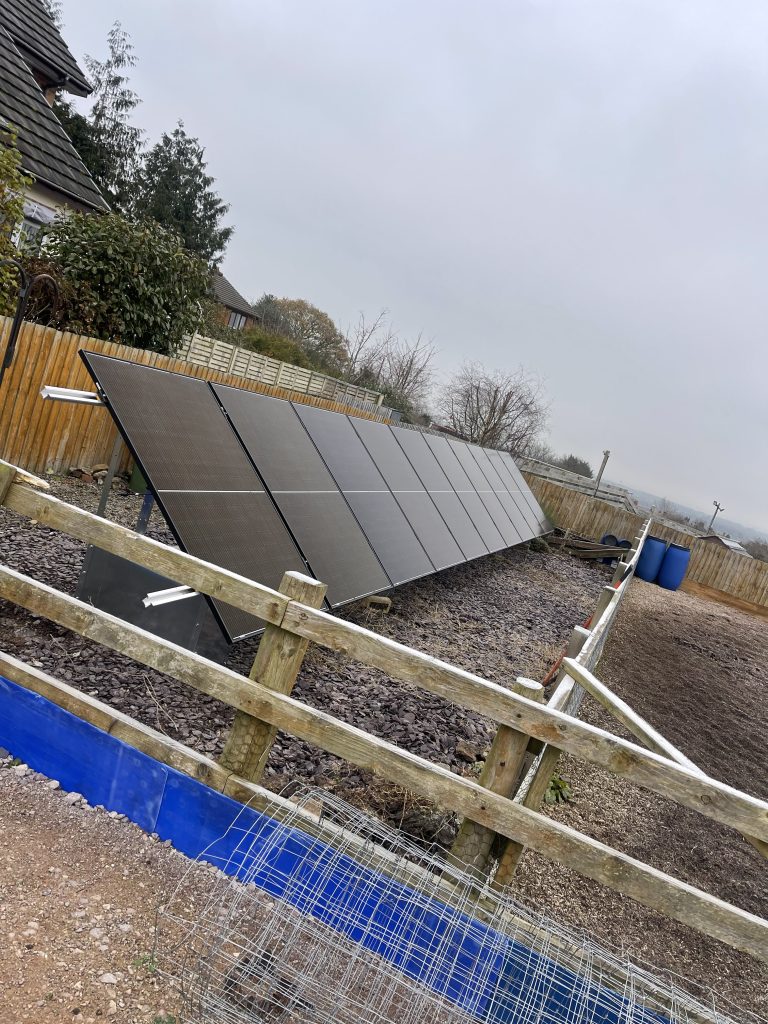
Why Solar Power Is Becoming Important for Agricultural Properties
Farms and agricultural businesses can have very different energy requirements from ordinary domestic properties.
Electricity may be needed for refrigeration, lighting, ventilation, water pumping, milking equipment, grain handling, machinery, workshops, livestock facilities and other agricultural operations. Depending on the size and type of farm, these electrical demands can represent a significant ongoing requirement.
At the same time, many agricultural properties have buildings with substantial roof areas that may provide opportunities for solar PV.
This combination makes agricultural solar panels an option worth investigating for farms, agricultural businesses and landowners looking at renewable energy.
However, installing solar panels on an agricultural building requires more than simply identifying a large roof. The building, roof condition, electricity consumption, electrical infrastructure, available space and future requirements should all be considered before the system is designed.
AZM Energy provides Agricultural Solar PV solutions as part of its wider renewable energy services, helping agricultural customers explore the potential of solar generation for their properties.
What Makes Agricultural Buildings Different?
A farm can contain several different types of buildings, each with its own purpose and energy requirements.
A property might include:
- Barns
- Workshops
- Storage buildings
- Livestock buildings
- Agricultural warehouses
- Refrigerated facilities
- Machinery sheds
- Offices
- Processing areas
Some buildings may consume substantial electricity during the daytime, while others may have much lower or more irregular demand.
This matters because solar PV generates electricity during daylight hours.
A building that has significant daytime electricity consumption may have a different solar-use profile from a storage building that is rarely occupied.
Before deciding on a system, it is therefore useful to understand where electricity is being used, how much is being consumed and when demand occurs.
Start With Your Farm’s Electricity Consumption
One of the first steps in considering solar for an agricultural property is reviewing electricity usage.
Rather than looking only at the total annual electricity bill, businesses should consider how consumption changes throughout the day and across different seasons.
For example, a farm may have electrical equipment operating throughout the day, creating a useful overlap with solar generation.
Another agricultural business may have higher electricity requirements during specific periods, such as when machinery or processing equipment is operating.
Understanding this pattern helps provide a better basis for considering the potential size and configuration of a solar PV installation.
A professional assessment can take the property’s energy requirements into account rather than selecting a system based solely on the available roof area.
Large Roofs Can Provide Valuable Solar Space
One of the characteristics of many agricultural properties is the availability of large buildings with relatively extensive roof areas.
This can create opportunities for solar PV.
However, available roof area and usable roof area are not always the same thing.
The assessment may need to consider:
- Roof condition
- Roof construction
- Roof pitch
- Orientation
- Structural suitability
- Skylights
- Ventilation equipment
- Roof access
- Shading
- Existing installations
- Maintenance requirements
A large roof is therefore a starting point rather than a guarantee that a large solar system can be installed.
The proposed array needs to be designed around the building and its specific characteristics.
Check the Roof Before Installing Solar Panels
The condition of an agricultural building’s roof should be carefully considered before solar installation.
If the roof requires major repairs or is approaching the end of its useful service life, it may be sensible to address those issues before installing solar equipment.
This is particularly important because solar panels are intended to remain in place for many years.
If a roof needs significant work after the solar installation has been completed, the panels and associated equipment may create additional complications.
For farm owners, combining roof planning with solar planning can therefore help avoid unnecessary disruption in the future.
A professional assessment can help identify whether the proposed roof area is appropriate for solar PV.
Agricultural Solar Panels Need the Right System Design
There is no standard solar system that suits every farm.
A small agricultural business may have completely different requirements from a large commercial farming operation.
The system design can take account of:
- Electricity consumption
- Building size
- Available roof space
- Roof orientation
- Shading
- Electrical infrastructure
- Operating hours
- Seasonal energy requirements
- Future expansion
- Battery storage
- EV charging requirements
This is why businesses should not simply choose the largest system that can physically fit on a roof.
The objective is to create a solar PV system that makes practical sense for the property’s energy requirements.
Daytime Electricity Demand Can Be Important
Solar PV produces electricity during daylight hours, making the timing of electricity consumption an important consideration for agricultural businesses.
Many farms carry out essential activities during the day.
Depending on the operation, electricity may be used for refrigeration, pumps, lighting, processing, ventilation or other equipment while solar generation is taking place.
This creates an opportunity to use generated electricity as part of normal agricultural operations.
The actual suitability depends on the individual farm.
A professional assessment can help establish how the solar system could fit with the property’s electricity consumption and whether additional energy-storage options should be considered.
Could Battery Storage Work With Agricultural Solar?
Solar generation and agricultural electricity demand may not always occur at exactly the same time.
A farm could generate more solar electricity than it immediately needs during certain periods and require additional electricity later.
Battery storage can provide a way of storing suitable surplus electricity for potential later use.
For agricultural businesses, battery storage may therefore be worth considering alongside solar PV.
AZM Energy provides Battery Storage solutions that can complement renewable energy systems.
The correct battery capacity depends on the individual property.
Factors such as solar system size, electricity demand, operating patterns and future energy requirements should all be considered before selecting a battery.
The goal should be to create an integrated system rather than simply adding equipment because it is available.
Farms May Have Significant Electrical Requirements
Agricultural properties can have complex electrical installations.
Depending on the operation, a farm may use multiple buildings and a range of electrical equipment.
This makes the electrical infrastructure an important part of solar PV planning.
Solar generation, battery storage and other equipment need to work appropriately with the property’s wider electrical system.
This is one area where working with a company that understands both renewable energy and electrical installations can be useful.
AZM Energy provides renewable energy solutions alongside electrical services, allowing businesses to consider the electrical requirements of their wider project.
If the agricultural property requires additional electrical work, this should be discussed during the planning stage rather than after the solar installation has been designed.
What About Three-Phase Electrical Systems?
Larger agricultural and commercial properties may have electrical requirements that differ from typical domestic installations.
Some farms operate equipment that requires more substantial electrical infrastructure, and the property’s electrical configuration can therefore be an important part of the solar assessment.
The appropriate solution depends on the existing installation and proposed solar system.
Businesses should not assume that a system designed for a domestic property can simply be scaled up for a farm.
Commercial and agricultural solar projects should be assessed according to the building’s actual electrical requirements.
Think About Electric Vehicles and Farm Machinery
Agricultural businesses are also looking at how vehicle use may change as electric technology develops.
Depending on the business, there may be electric cars, vans or other vehicles requiring charging facilities.
If EV charging is likely to become part of the property’s electricity demand, it can be worth considering this during solar planning.
AZM Energy provides EV charging services alongside solar PV and electrical solutions.
For a farm planning several energy-related improvements, considering solar, battery storage and EV charging together can provide a more complete picture of future electricity requirements.
Solar Can Be Considered for Different Agricultural Buildings
Solar PV is not limited to one type of farm building.
Depending on suitability, agricultural solar panels may be considered for buildings such as:
Barns
Large barn roofs can potentially provide significant space for solar arrays, subject to suitability and assessment.
Workshops
Workshops may have daytime electricity demand from tools, machinery and other equipment.
Storage Buildings
Storage facilities may have lighting, ventilation or other electrical requirements.
Agricultural Warehouses
Larger warehouse-style buildings can have substantial electricity requirements depending on their use.
Processing Facilities
Businesses involved in agricultural processing may have equipment that creates considerable electricity demand.
Each building should still be assessed individually.
What About Shading on Agricultural Properties?
Agricultural properties can have extensive surrounding land, but trees, buildings, silos, machinery and other structures may still create shading.
Shading can reduce the amount of sunlight reaching affected solar panels.
This is why the surrounding environment should be considered during system design.
A professional solar assessment can look at the building’s surroundings and identify factors that may influence panel placement.
The aim is to make effective use of the available roof while taking practical installation considerations into account.
Maintenance and Access Should Be Considered
Agricultural buildings can operate in demanding environments.
Dust, dirt, machinery activity and other environmental factors can affect the conditions around a solar installation.
Access for inspection and maintenance should therefore be considered when the system is designed.
Solar panels should not be installed in a way that creates unnecessary difficulties for future roof maintenance or other essential building work.
Planning access routes and equipment placement carefully can help make future maintenance more practical.
Don’t Design a Farm Solar System Around Roof Size Alone
A common mistake is to look at a large agricultural roof and immediately assume that the largest possible solar array should be installed.
However, roof size is only one factor.
Suppose a farm has a large building but relatively low electricity consumption. Installing a system far beyond the property’s practical requirements may not necessarily be the best approach.
Conversely, a farm with substantial electricity demand may benefit from making better use of available roof space.
The correct system therefore depends on the relationship between:
Roof space + solar potential + electricity demand + electrical infrastructure + future requirements.
This is why professional design is important.
Consider Future Changes to the Farm
Agricultural businesses can evolve over time.
A farm might add refrigeration, expand livestock facilities, introduce new machinery, increase processing capacity or develop additional buildings.
These changes can alter electricity demand.
If you are considering solar panels for farms, it is worth discussing potential future developments with the installer.
A solar installation should be considered in the context of the property’s longer-term energy requirements where possible.
This does not mean installing excessive capacity without justification. Instead, it means avoiding a design that ignores foreseeable changes.
Agricultural Solar in Staffordshire and Surrounding Areas
AZM Energy provides renewable energy solutions across Staffordshire and surrounding areas.
For agricultural businesses considering agricultural solar panels, the company provides a dedicated Agricultural Solar PV service covering the specific needs of agricultural customers.
AZM Energy also provides solar PV services in several locations.
Businesses and landowners in Stafford can explore Solar PV Stafford.
Those in Burton upon Trent can find information about Solar PV Burton upon Trent.
For businesses considering energy storage in the Burton area, Battery Storage Burton upon Trent is also available.
Further coverage can be found through AZM Energy’s Areas We Serve page.
Questions to Ask Before Installing Solar on a Farm
Before proceeding with an agricultural solar installation, landowners and farm businesses should consider several practical questions.
Is the roof suitable?
The roof should be assessed for condition, construction and available installation space.
How much electricity does the farm use?
Understanding current consumption helps inform system planning.
When is electricity being used?
Daytime consumption can be particularly relevant because solar generation occurs during daylight hours.
Is battery storage appropriate?
A battery may be worth considering if there is suitable surplus generation and a reason to use stored energy later.
Does the electrical system need assessment?
The property’s existing electrical infrastructure should be considered before new renewable energy equipment is installed.
Are future energy requirements changing?
New machinery, buildings, EV charging or other developments could alter electricity consumption.
How will maintenance be handled?
The system should be designed with appropriate access and long-term operation in mind.
Why Professional Installation Is Important
Agricultural solar projects can involve large roof areas, substantial electrical equipment and complex operational environments.
Professional system design and installation can help ensure that the project is considered as a complete system.
This includes the solar panels, electrical equipment, building characteristics, energy consumption and any additional technologies being considered.
AZM Energy combines renewable energy and electrical expertise, providing solar PV, battery storage and EV charging solutions for customers.
This wider approach can be particularly useful for agricultural businesses planning several energy improvements at once.
Solar PV Can Form Part of a Wider Farm Energy Strategy
For agricultural businesses, solar PV does not have to be considered as an isolated technology.
Depending on the property, it can form part of a broader energy system involving:
- Solar PV
- Battery storage
- EV charging
- Electrical infrastructure
- Energy monitoring
- Future renewable energy requirements
The right combination will vary from one agricultural business to another.
The important first step is understanding the property’s current energy use and physical characteristics.
Explore Agricultural Solar With AZM Energy
Agricultural solar panels can provide an opportunity for farms and agricultural businesses to generate renewable electricity from suitable buildings.
However, the best system is not simply the one with the greatest number of panels.
Roof condition, available space, electricity consumption, operating hours, shading, electrical infrastructure, battery storage and future requirements all need to be considered.
A professional assessment can help determine what type of solar PV system may be suitable for the property and whether additional technologies such as battery storage or EV charging should form part of the wider plan.
AZM Energy provides Agricultural Solar PV solutions alongside commercial solar, battery storage, EV charging and electrical services.
If you are a farm owner, agricultural business or landowner considering solar panels for farms, contact AZM Energy to discuss your property, electricity requirements and renewable energy options.